FGD Gypsum
- Large storage capacity
- Saving valuable space
- Environmentally safe
- Fully automated
Cost efficient all-in-one solution
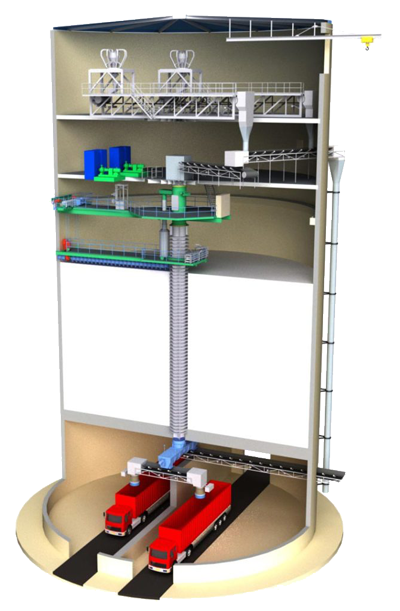
The Eurosilo storage solution for FGD Gypsum combines three logistic functions at the smallest possible footprint. Dewatering, storage and load out are all combined in one fully automated silo system. Instead of a separate dewatering unit and transport to a storage and load out facility – requiring operators, power shovels and transport – there is just one cost saving and complete solution. Not only will it reduce the required space at your plant site to a third, it will also reduce the manpower needed and drastically improve the reliability of handling wet and sticky FGD Gypsum. Compared to conventional silos, the Eurosilo system extents the storage period from just a few days to over three months without any risk of block ups.
Case Study – FGD Gypsum
The Maasvlakte Power Station in the Netherlands is a coal- and biomass-fired power station, owned by Uniper Benelux. To meet the latest emission requirements, the power plant is equipped with flue gas cleaning systems. ESI was asked to replace the initial storage system for FGD Gypsum as this system continued to cause logistic problems and extra costs as a result of block ups and down time. Since the retrofit in 2016, the Eurosilo system handles the storage successfully at the power station.
Central slotted column for cohesive materials
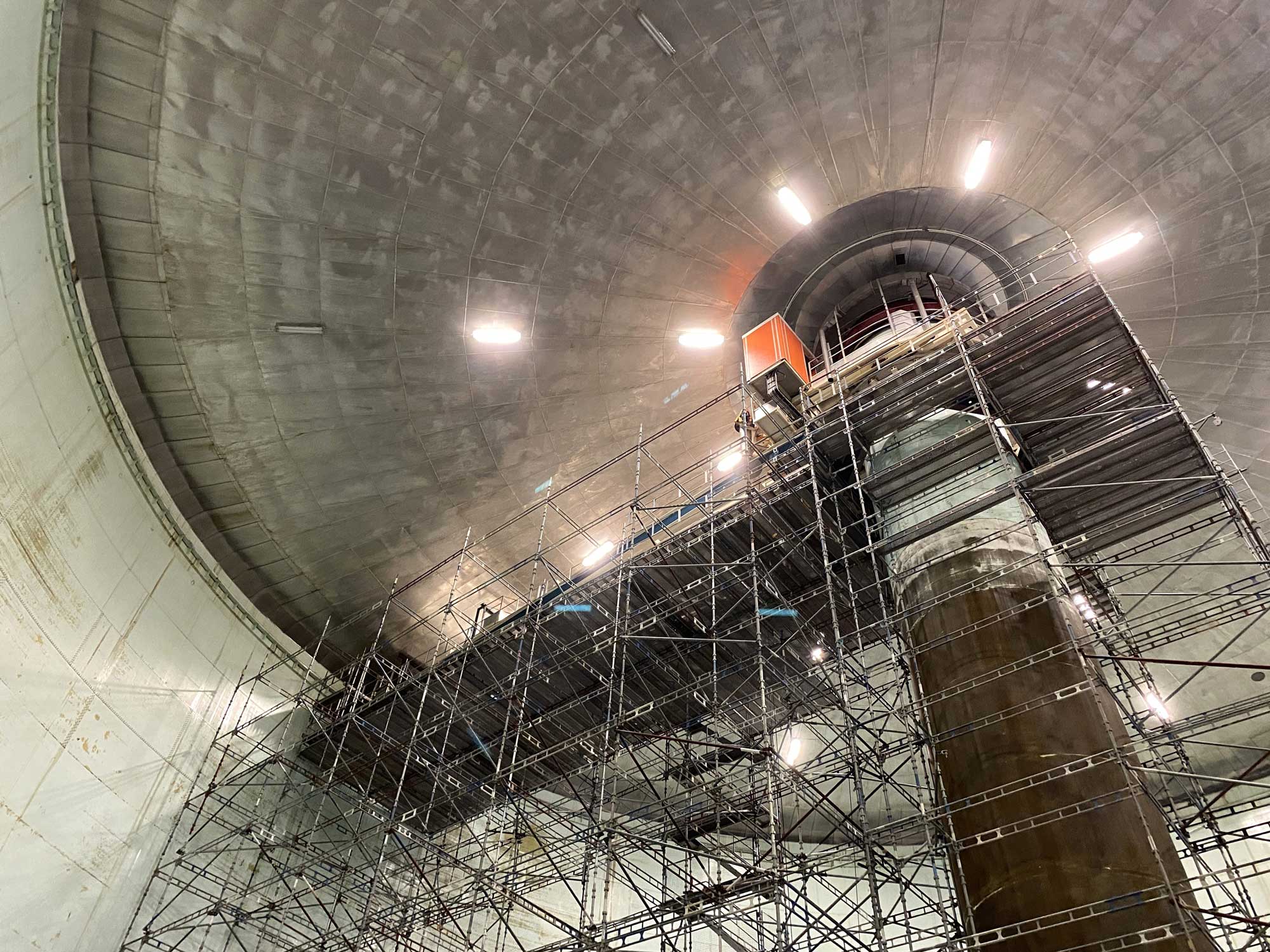
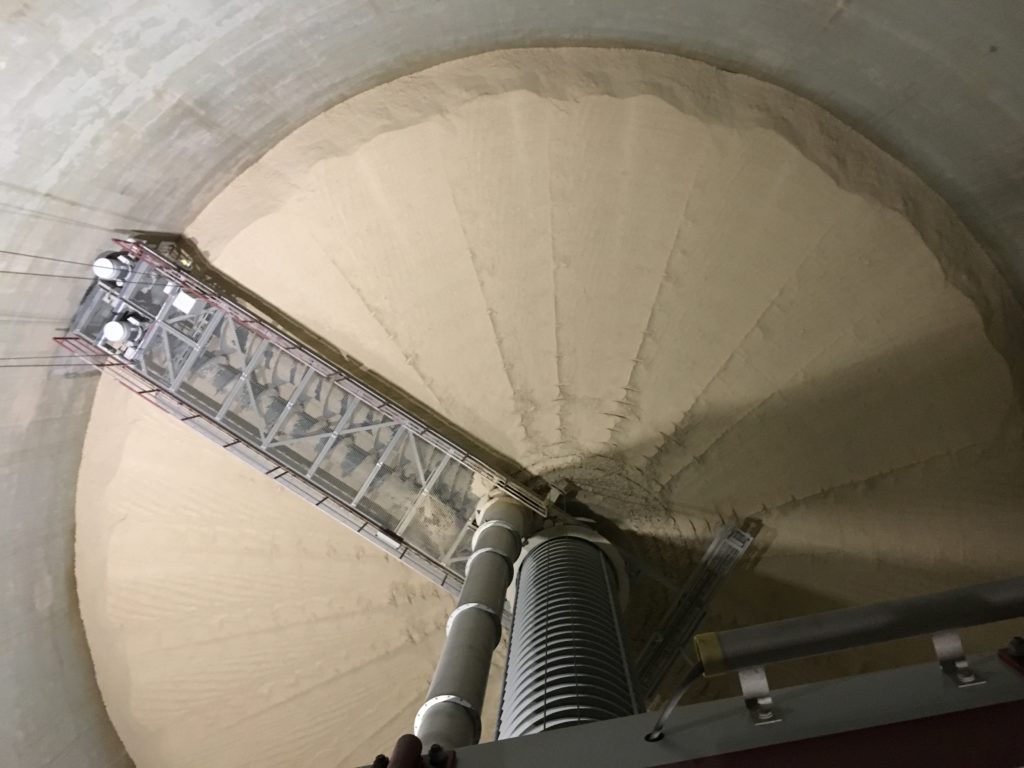
In order to eliminate block-ups, caused by the poor flow properties of FGD Gypsum, the silo is equipped with a powerful reclaiming system: the central slotted column. The stored FGD Gypsum is fed through the slots, formed by the horizontal flat rings, and freely descends down the column. The FGD Gypsum Eurosilo comes with a drainage system at the bottom. This prevents the formation of a sticky layer in the lower regions of the stored mass. In addition, we have developed a system that creates under-pressure in the dewatering system. The complete system will improve your logistic flexibility and preserve the condition of the stored gypsum.
Logistic reliability and flexibility
- Maximum logistic control & flexibility
- No block ups with FGD Gypsum
- Minimal operating and maintenance costs
- High availability due to minimal downtime
- Minimal footprint for large scale storage
- Combining dewatering, storing and load out in one building
FAQ
Yes, the FGD gypsum Eurosilo is designed for high-moisture ‘wet’ gypsum. The horizontal flat rings of the central column create natural repose angles for the material. This way the central column secures an open channel in the stored mass through which the gypsum can freely descend.
The fully enclosed Eurosilo design prevents gypsum dust from escaping into the atmosphere and protects the gypsum as well as the environment from rainwater seeping through and percolating the ground. The load-out system uses telescopic bellows to reach the transport vehicle, ensuring a dust-free transfer of the FDG gypsum.
The Eurosilo system is designed to save space by consolidating three functions into one. During the engineering phase, the height-to-diameter ratio can be optimized to fit within existing plant height clearances or restricted footprints, as demonstrated in the Uniper Maasvlakte Power Station case.
The vertical load of stored gypsum and the integrated dewatering system require a reinforced concrete slab with integrated drainage channels. ESI provides load-bearing requirements and interface drawings to civil contractors, ensuring the foundation to support the weight while the drainage system can exit the silo.
The fully automated control system uses sensors to synchronize the rotating distribution frame with the incoming feed rate. If the dewatering process requires more time, the system adjusts the discharge speed to ensure that only material with the correct moisture profile is loaded out into trucks or railcars.
Yes. Since FGD gypsum contains significant moisture, freezing can be a risk. The Eurosilo can be equipped with insulation and trace heating for the drainage and discharge areas to ensure that the dewatering process remains uninterrupted and the gypsum does not freeze to the silo walls or discharge gates.
Because the central slotted column has no moving parts in direct contact with the main bulk of the gypsum, maintenance is reduced to only the external mechanical drives and the automated control systems, which can be accessed without emptying the silo.
The under-pressure system accelerates the extraction of moisture from the core of the stored mass. By creating a vacuum-like effect in the drainage layers, it prevents the gypsum from reaching a ‘saturated’ state where it becomes a non-flowable paste, ensuring the material remains brittle enough for the reclaim mechanism to handle even after months of storage.